
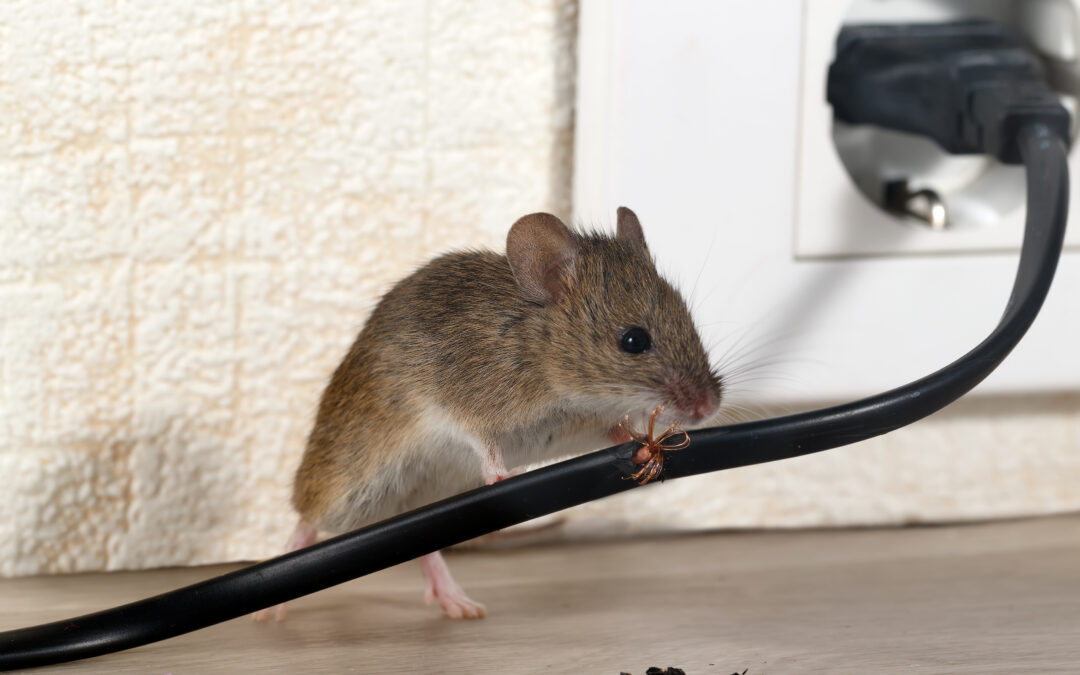
Most people never see the mouse. They see what it left behind: a few dark pellets in a drawer, a chewed corner on a cereal box, a scratching sound above the ceiling after the house goes quiet. The signs of mice in a house are easy to find once you know where to look, and the harder question is usually whether those clues are from last winter or from last night. Thermal Clean handles rodent and general pest work across the Denver metro and the Front Range, and this is the same clue-by-clue check our technicians run when a homeowner asks, “Do I actually have mice right now?”
Work through each sign below, note where you find it, and then use the fresh-versus-old test near the end to decide if the activity is current.
Why October Is When Denver Homeowners Start Finding Clues
Once Front Range nights turn cold, mice start looking for warm shelter close to food, and a house checks both boxes. Our fall pest control guide for Denver homes covers why rodents push indoors this time of year, so we won’t repeat it here. What matters for this checklist is timing: the evidence you find in October is often the start of a problem, while the evidence you find in February may be the leftovers of one that has been building for months.
Clue 1: Mouse Droppings
Droppings are the most common sign and usually the first one people notice. The CDC recommends regularly checking your home for rodent droppings and gnaw marks because both are reliable signs that rodents are present.
What Do Mouse Droppings Look Like?
Mouse droppings are small, dark, and pellet-shaped, with tapered ends. They’re much smaller than rat droppings. You’ll tend to find them scattered rather than piled, because mice leave droppings as they travel and feed instead of using one spot.
Where to Look
- Inside kitchen cabinets and drawers, especially along the back edges and in corners
- Under the sink, around the pipe openings
- Behind and under the stove, refrigerator, and dishwasher
- Along baseboards in the pantry, laundry room, and basement
- In stored boxes in the garage or basement
Where droppings cluster tells you a lot. According to UC Integrated Pest Management’s house mouse guide, house mice seldom travel more than 30 feet from their nest and food supply. A heavy cluster usually means the nest is close by.
How to Clean Up Droppings Safely
Mouse droppings and urine can carry disease, so how you clean matters as much as what you find. The CDC’s rodent cleanup guidance lays out these steps:
- Open doors and windows for 30 minutes before you start, to air out the space.
- Put on rubber or plastic gloves.
- Mix a bleach solution of 1 part bleach to 9 parts water (about 1.5 cups of household bleach per gallon of water), or use an EPA-registered disinfectant.
- Spray the droppings and urine until they’re very wet, then let them soak for 5 minutes or as long as the product label says.
- Wipe everything up with paper towels and throw them away in a covered garbage can.
- Wash your hands with soap and warm water after you take the gloves off.
Don’t sweep or vacuum droppings, urine, or nesting material. The CDC warns that doing so can put tiny droplets containing viruses into the air. For rugs and upholstered furniture, the CDC recommends shampooing with a commercial disinfectant or a commercial-grade steam cleaner.
Clue 2: Gnaw Marks
Mice chew constantly. Look for small, rough-edged holes in food packaging, chewed corners on cardboard boxes, and scraped edges on wood trim, cabinet backs, and baseboards. Fresh gnawing on wood usually looks lighter and cleaner than the surface around it, while older gnawing weathers and darkens over time.
Pay close attention to anything electrical. UC IPM notes that house mice can damage structures and vehicles by gnawing on electrical wires and gas lines. Chewed wire insulation in an attic, behind an appliance, or under a car hood is a reason to stop and get help rather than keep watching.
Clue 3: Rub Marks Along Walls and Baseboards
Mice like to travel along edges with their bodies against a wall. Over time, oils and dirt from their fur can leave faint, grayish smudges along baseboards, on the edges of pipes, and around the openings they use to get in and out. Mouse rub marks are much subtler than rat marks, so check with a flashlight held low and at an angle. Smudges that line up with a gap, a pipe opening, or a cabinet corner usually mark a regular travel route.
Clue 4: Nesting Material
A mouse nest is a loose ball of shredded material. UC IPM suggests searching behind boxes, in drawers, in garages, and around woodpiles for nests made of finely shredded paper or other fibrous material. Common finds in Denver homes include shredded paper towels, insulation pulled from a wall, fabric scraps in a storage bin, and dryer lint gathered behind the washer. If you find a nest, treat it like droppings and follow the same wet cleanup method.
Clue 5: Sounds at Night
UC IPM notes that mice are most active at night, though you may see them in daylight. That’s why the classic sign is scratching, skittering, or light rustling in the walls, ceiling, or under the floor after the house gets quiet. Sounds that repeat in the same spot night after night are more meaningful than a single noise, which could be the house settling as the temperature drops.
Clue 6: Odor
A lingering musky smell is commonly associated with mice, according to UC IPM. It tends to be strongest in enclosed spaces such as a pantry, a closed cabinet, or a storage closet. If a cabinet smells stale even after you’ve cleaned it, check the back corners and the gap around any pipes for droppings or nesting material.
Clue 7: Nibbled Food and Pet Food
The CDC lists nibbled food along with droppings and nesting material as signs of rodent activity. Check bags of pet food, birdseed, grass seed, and dry goods such as rice, pasta, and cereal. Pet food left out overnight is one of the most common attractions we see.
House Mouse or Deer Mouse? Why It Matters in Colorado
Colorado has both house mice and deer mice, and the difference matters for your health. UC IPM describes the house mouse as having an overall gray coat, while the deer mouse has larger eyes and a white underside with a sharp line between its darker top and white belly.
The CDC identifies the deer mouse as the main carrier of the hantavirus that causes hantavirus pulmonary syndrome in the United States. People are exposed through contact with rodent urine, droppings, and saliva, and symptoms usually start 1 to 8 weeks after contact. If you see a mouse with a bright white belly, or you’re cleaning a shed, cabin, or closed-up garage with a lot of droppings, follow the CDC cleanup steps carefully and consider having a professional handle it.
The Fresh-vs-Old Test: Is the Activity Current?
Finding evidence doesn’t always mean you have mice today. Old droppings can sit in a wall void or a basement corner for years. Here’s a simple way to tell.
Step 1: Clean One Area Completely
Pick the spot with the most evidence, such as the cabinet under the sink, and clean it using the CDC method above. You want a completely clear surface so anything new stands out.
Step 2: Check Again in Two or Three Days
Look at the same spot with a flashlight. New droppings on a surface you just cleaned mean mice are active now. No new droppings after several checks suggests the evidence you found was old.
Step 3: Look for Other Current Signs
- Fresh, light-colored gnaw marks where there weren’t any before
- New holes in food packaging
- Nesting material that has moved or grown
- Scratching sounds that repeat in the same spot
Step 4: Set Snap Traps to Confirm
The CDC recommends traditional snap traps and advises placing the baited end next to the wall so the trap forms a “T”. Check traps daily. The CDC also advises against glue traps and live traps, since they can frighten rodents and cause them to urinate, which increases exposure. A trap that catches a mouse within a night or two is about as clear a sign of current activity as you’ll get.
Why Early Signs Deserve Attention
A few droppings can feel like a small problem, but mice reproduce quickly. UC IPM reports that a single female house mouse may have 5 to 10 litters a year, each with about 5 or 6 pups. That’s why a problem that looks minor in October can be much bigger by the time Denver’s coldest weeks arrive. Our post on why mice and bed bugs peak indoors during Denver winters explains what happens when that indoor season gets going.
When the Evidence Justifies an Inspection
You can monitor a single old sign on your own. These situations call for a professional look:
- New droppings show up on a surface you already cleaned
- You find evidence in more than one room or on more than one floor
- You hear activity in walls or ceilings on several nights
- You find chewed wiring or damage near gas lines
- You suspect deer mice, or you’re facing a large cleanup in an enclosed space
- Traps keep catching mice after the first week
Thermal Clean’s general pest control service for Denver homes uses an integrated plan of pesticide application, prevention, and exclusion. A technician inspects your property, finds where the activity is coming from, and builds a plan around your home.
Book a Mouse Inspection in the Denver Area
If your clues passed the fresh test, don’t wait for the problem to grow through the winter. Contact Thermal Clean to schedule a mouse inspection anywhere in the Denver metro or along the Front Range, and we’ll help you figure out what you’re dealing with and what to do next.