
Peak-season readiness for Denver hospitality teams
July in Denver brings full rooms, fast turns, and heightened sensitivity to guest feedback. When a guest reports “bed bugs,” the worst outcomes usually come from uncertainty: unclear responsibilities, delayed response, and inconsistent documentation. This hotel bed bug complaint process is designed for managers, housekeeping supervisors, and operations teams who need a calm, repeatable procedure that protects guests, staff, and your property—while limiting the risk of negative reviews.
Why “bite complaints” need a structured response (not guesswork)
Bed bug bites can look like other insect bites or skin irritation, and the CDC notes that confirmation is best achieved by identifying the insect itself (an adult/nymph) rather than relying on skin reactions alone. Operationally, that means your process should treat every report seriously, but your decisions should be evidence-based and documented.
Your hotel bed bug complaint process (front desk + housekeeping + management)
| Phase | Goal | Who Leads | What to Do (Standard Steps) |
|---|---|---|---|
| 1) Receive | Stabilize the situation and show care | Front desk / MOD | Thank the guest, apologize for the experience (without admitting cause), and move the conversation to a private area. Ask: “When did you first notice it? Where in the room? Any photos?” Offer immediate room change options (not adjacent if possible) and bagging assistance. |
| 2) Contain | Reduce spread risk and preserve evidence | Housekeeping supervisor | Take the room out of service immediately. Do not strip bedding through hallways unbagged. Bag linens in-room. Ask the guest to keep belongings bagged/contained until relocated. Bed bugs can travel via luggage seams, clothing folds, and bedding. |
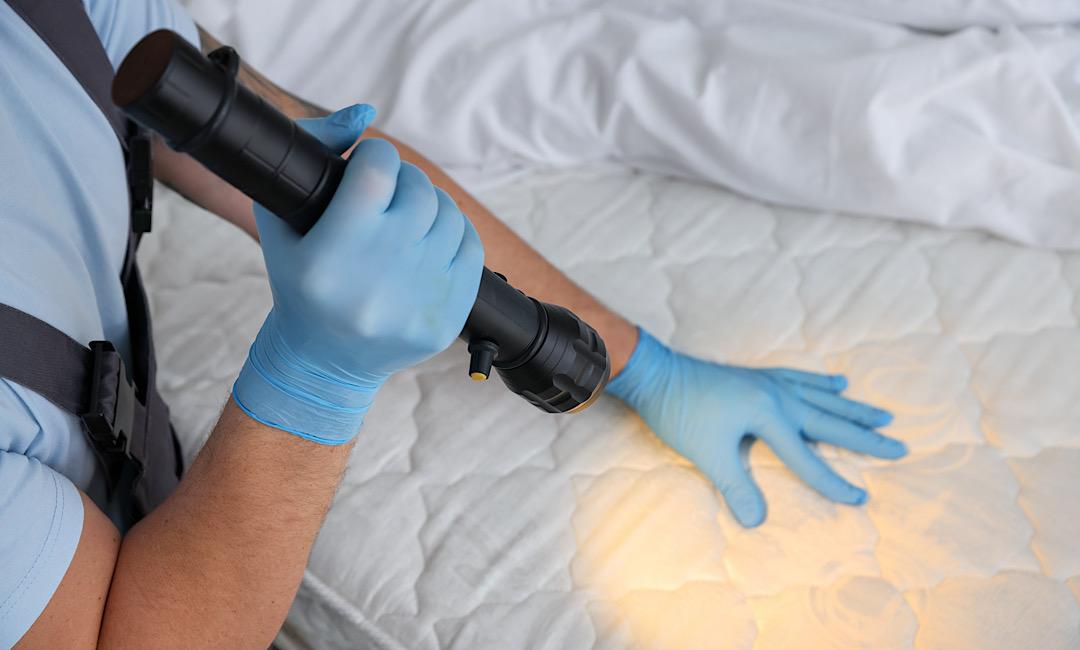
| 3) Inspect | Confirm or rule out evidence | Trained staff + pro partner | Use a flashlight and focus within ~8 feet of the bed: mattress seams/labels, headboard, bed frame cracks, upholstered furniture, and baseboards. Document findings with photos and a checklist. If you find a specimen, preserve it (sealed container) for identification. |
| 4) Decide | Apply the right level of response | GM / Ops | If evidence is present or strongly suspected: treat room + consider adjacent/above/below rooms. If no evidence: keep the room OOO until a qualified inspection is completed and documented (avoid “quick flips” during peak occupancy). |
| 5) Treat + Verify | Eliminate bed bugs and prevent recurrence | Licensed pest pro | Follow an IPM plan: physical removal/cleaning, targeted treatment, monitoring, and re-inspection. Heat remediation is commonly used as a non-chemical method within IPM programs; pesticide use should be targeted and label-compliant. |
Guest communication scripts (calm, clear, consistent)
Tip: The CDC emphasizes that bed bugs commonly spread via luggage seams and folded items—so offering practical guidance (without alarm) builds trust.
Did you know? Quick facts staff should remember
Step-by-step: A simple inspection protocol for housekeeping supervisors
Step 1: Prep (2 minutes)
Put on disposable gloves, bring a flashlight, and have sealable bags/containers ready. Start a brief log: room number, date/time, guest complaint summary, and staff involved.
Step 2: Bed focus (8–10 minutes)
Inspect mattress seams, piping, and tags; check the headboard (front/back if accessible) and bed frame cracks. Look for live bugs, shed skins, or dark spotting on seams.
Step 3: Near-bed zone (5–7 minutes)
Inspect upholstered chair seams, nightstand joints, baseboards, and the edge where carpet meets the wall. Bed bugs hide in tight crevices and nearby furniture.
Step 4: Bag and label laundry
Bag linens inside the room and label them by room number for controlled transport. Avoid shaking linens; it can dislodge evidence and increase spread risk.
Step 5: Escalate and document (non-negotiable)
If anything suspicious is found, keep the room out of service and escalate to your pest management partner for confirmation and treatment planning. IPM guidance from EPA emphasizes combining inspection, non-chemical controls, and targeted treatment rather than relying on a single tactic.
Local angle: Denver operations during summer occupancy spikes
Denver’s busy travel months create a perfect storm: more luggage moving through rooms, faster turns, and less downtime for deep inspection. Two practical changes make a measurable difference:
Need a fast, professional bed bug response in Denver?
Thermal Clean provides commercial bed bug inspection and extermination support across Denver and Colorado’s Front Range, including one-day treatment options using thermal heat remediation and targeted pesticide application when appropriate.